Unlocking the Potential of Remote Online Notarization (RON)
Discover how Remote Online Notarization (RON) is revolutionizing notarial acts, offering convenience, security, and legal compliance.
Key Takeaways
- •Remote Online Notarization (RON) allows for the digital notarization of documents remotely.
- •RON employs advanced security measures for identity verification and document signing.
- •The process is legally recognized in many jurisdictions, though laws vary.
- •RON offers significant benefits including convenience, efficiency, and accessibility.
- •Choosing the right RON provider is crucial for compliance and security.
Remote Online Notarization (RON) has emerged as a game-changer in the realm of legal documentation and notarial acts, especially in our increasingly digital world. This innovative process allows individuals and businesses to notarize documents remotely, eliminating the need for physical presence. The convenience, security, and efficiency of RON are transforming how notarial acts are performed, making it an indispensable tool for the modern era.
What is Remote Online Notarization (RON)?
Remote Online Notarization refers to the process of notarizing documents over the internet using digital tools and secure technology. Unlike traditional notarization, which requires the physical presence of the signer, RON allows signers to authenticate their documents from anywhere, provided they have an internet connection. This process is facilitated by a commissioned notary public who uses digital signatures, secure identity verification, and video conferencing technology to perform notarial acts.
How Does RON Work?
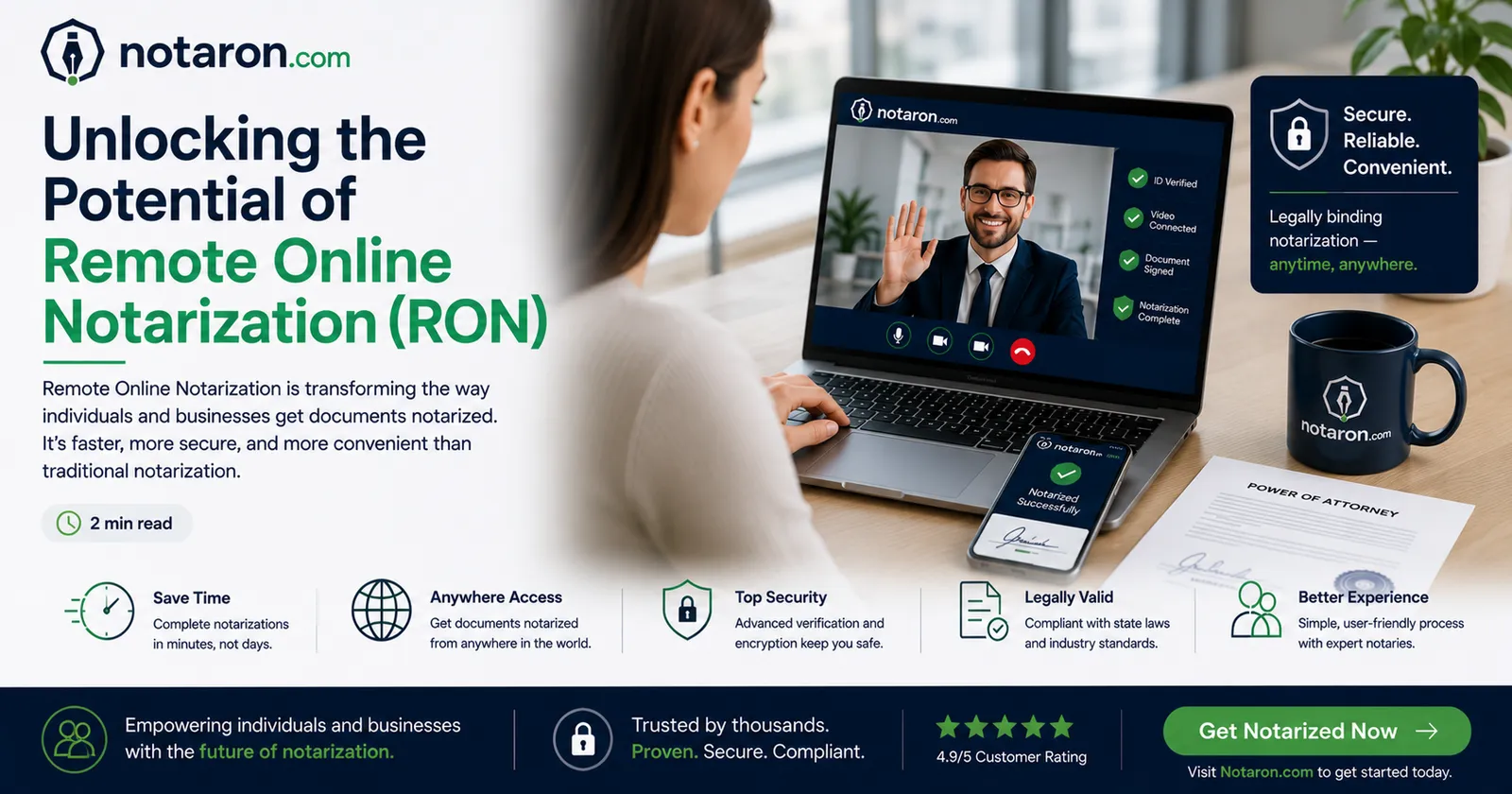
- Document Upload: The signer uploads the document that needs to be notarized to a secure platform.
- Identity Verification: The signer's identity is verified through a combination of knowledge-based authentication (KBA) and credential analysis.
- Video Conference: The signer and the notary meet via a live video call, during which the notary ensures the signer understands the document and is signing willingly.
- Document Signing: Using digital signatures, the signer and the notary sign the document.
- Notarization: The notary affixes a digital notarial seal or stamp, and an electronic notarial certificate to the document, completing the process.
Benefits of RON
- Convenience: Notarize documents from anywhere, at any time.
- Security: Enhanced verification processes and digital record-keeping add layers of security.
- Efficiency: The process is quicker than traditional notarization, saving valuable time.
- Accessibility: Makes notarial services available to individuals who may have difficulty accessing traditional notary services.
Legal Compliance
RON is legally recognized in many jurisdictions, with laws and regulations varying by state and country. It's important to ensure that the RON service used complies with the legal requirements of your jurisdiction.
Choosing a RON Provider
When selecting a RON provider, consider factors such as security features, ease of use, and compliance with legal standards. Look for providers that offer comprehensive identity verification methods and secure document handling.
Conclusion
Remote Online Notarization is revolutionizing the way notarial acts are performed, offering a blend of convenience, security, and efficiency. As digital transformation continues to reshape various industries, RON stands out as a valuable tool for individuals and businesses alike, ensuring notarization can be done with ease, without compromising on legal requirements.
Embracing RON can significantly streamline your document notarization needs, making it an essential consideration for anyone looking to modernize their notarial practices.
Frequently Asked Questions
What is Remote Online Notarization?
Remote Online Notarization (RON) is a process that allows documents to be notarized digitally, without the need for physical presence, using video conferencing and digital signatures.
Is Remote Online Notarization legal?
Yes, RON is legally recognized in many jurisdictions, though laws and regulations vary by state and country. It's important to ensure compliance with local legal requirements.
How secure is Remote Online Notarization?
RON employs robust security measures, including knowledge-based authentication, credential analysis, and secure record-keeping, to ensure a high level of security.
Can any document be notarized online?
Most documents that require notarization can be processed through RON, but it's important to check if specific documents are eligible for online notarization in your jurisdiction.
How do I choose a RON provider?
When choosing a RON provider, consider factors such as security, compliance with legal standards, ease of use, and customer support.