
Can I Write My Own Will and Have It Notarized?
Discover whether you can create your own will, when notarization is required, and how online notarization can simplify estate planning documents.
Key Takeaways
- •You can usually write your own will without hiring a lawyer.
- •Most states do not require a will itself to be notarized.
- •Many wills must be signed in the presence of witnesses to be legally valid.
- •A self-proving affidavit can often be notarized to simplify probate.
- •Notarization does not replace your state's witness requirements.
- •Estate planning documents such as powers of attorney and trusts often require notarization.
- •Remote Online Notarization (RON) allows eligible documents to be notarized online.
- •State laws vary, so execution requirements differ by jurisdiction.
- •Improperly signed or witnessed wills may be challenged during probate.
- •Notaron makes it easy to notarize eligible estate planning documents online from virtually anywhere.
Can I Write My Own Will and Have It Notarized?
If you're creating a will, you've probably wondered: Can I write my own will and simply have it notarized?
The short answer is yes—you can usually write your own will. However, whether notarization is required depends on your state's laws.
What many people don't realize is that even when a will itself doesn't require notarization, there are often estate planning documents that benefit from being notarized, including self-proving affidavits, powers of attorney, advance healthcare directives, and trusts.
Can You Create Your Own Will?
In most states, you are allowed to create your own will without hiring an attorney. The document generally needs to meet certain legal requirements, which often include:
-
Being signed by the person making the will
-
Being witnessed by the required number of witnesses
-
Meeting any state-specific execution requirements
A will that does not meet these requirements may be challenged during probate, regardless of whether it was notarized.
Why Do People Get Wills Notarized?
While many states do not require the will itself to be notarized, notarization often comes into play through a document called a self-proving affidavit.
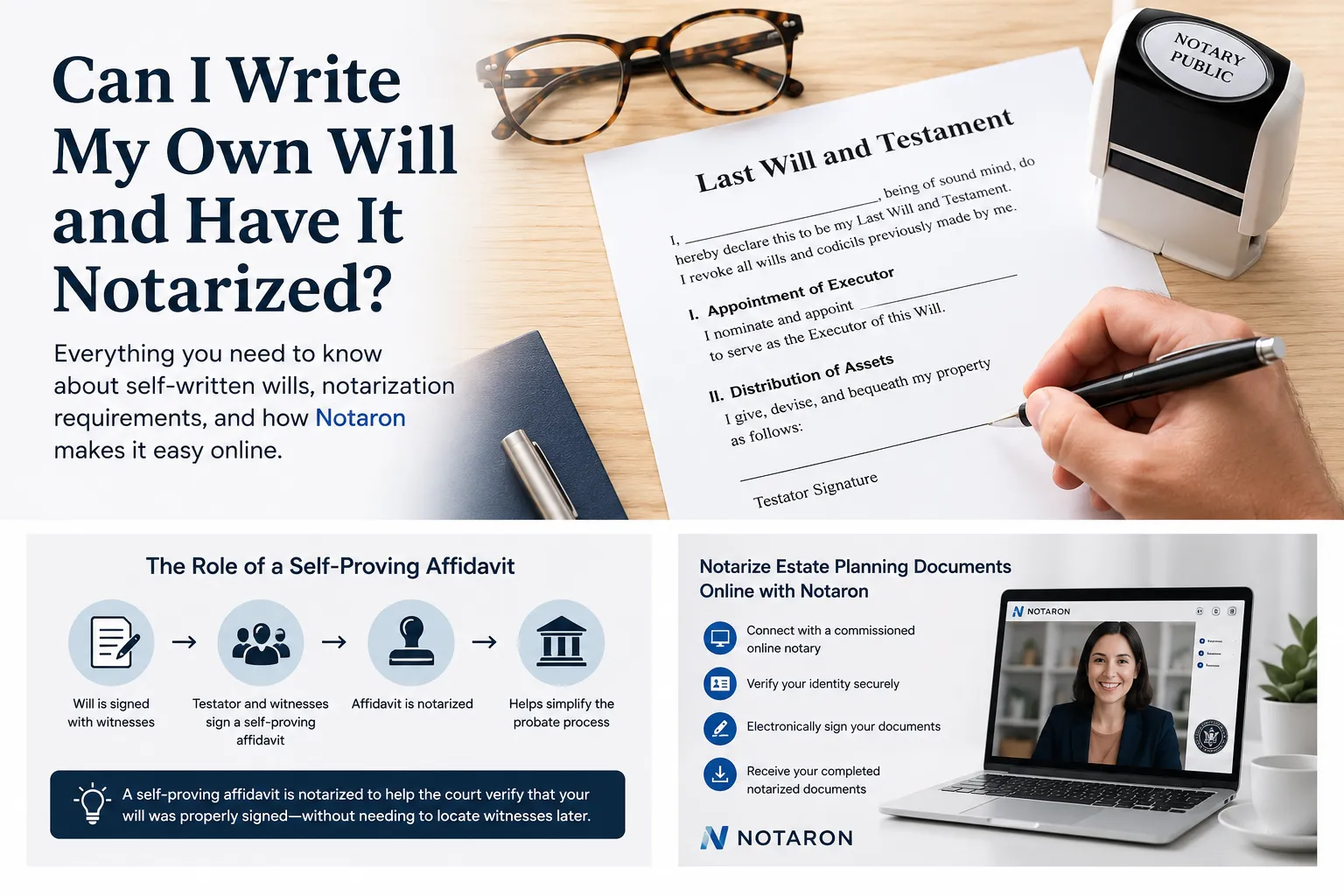
A self-proving affidavit is signed by the testator and witnesses before a notary. This additional document can help probate courts verify that the will was properly executed without having to locate witnesses years later.
In practical terms, that can mean:
-
Fewer delays during probate
-
Less paperwork for family members
-
A smoother estate administration process
Can I Get Estate Planning Documents Notarized Online?
In many states, yes.
Thanks to Remote Online Notarization (RON), you can often complete the notarization process from home using a computer, webcam, and government-issued ID.
Instead of searching for a local notary, scheduling an appointment, and driving across town, you can connect with a commissioned online notary in minutes.
How Notaron Makes the Process Easy
Whether you're completing a self-proving affidavit, power of attorney, trust document, or other notarized estate planning paperwork, Notaron provides a simple online experience:
-
Meet with a commissioned online notary by secure video conference
-
Verify your identity using advanced identity verification technology
-
Electronically sign your documents
-
Receive your completed notarized documents when the session is finished
No printing. No travel. No waiting in line
Common Estate Planning Documents That May Need Notarization
Depending on your state, you may need or choose to notarize:
-
Self-proving affidavits for wills
-
Powers of attorney
-
Revocable living trusts
-
Advance healthcare directives
-
Real estate transfer documents
Because requirements vary by state, you should always confirm the specific requirements that apply to your document.
The Bottom Line
You can often write your own will, but notarization alone does not automatically make a will valid. The key is following your state's legal requirements for execution and witnessing.
When it's time to notarize a self-proving affidavit or other estate planning documents, Notaron makes it easy to connect with a commissioned online notary from virtually anywhere.
Ready to get your will documents notarized online? Start your session with Notaron today.
Frequently Asked Questions
Can I write my own will without a lawyer?
Yes. In most states, you can create your own will without hiring an attorney. However, the will must comply with your state's legal requirements regarding signatures, witnesses, and execution.
Does a will need to be notarized?
In many states, a will itself does not need to be notarized to be valid. However, a self-proving affidavit attached to the will is often notarized to help simplify the probate process.
What is a self-proving affidavit?
A self-proving affidavit is a document signed by the person creating the will and the witnesses in front of a notary. It helps prove the will was properly executed without requiring witnesses to appear in court later.
Can I notarize my will online?
Depending on your state's laws, you may be able to notarize a self-proving affidavit and other estate planning documents through Remote Online Notarization (RON) using a secure video conference session.
Can I notarize my own will?
No. A notary cannot notarize their own signature or documents in which they have a direct interest. A commissioned notary public must perform the notarization.
What estate planning documents typically require notarization?
Common estate planning documents that may require or benefit from notarization include powers of attorney, trusts, self-proving affidavits, real estate documents, and certain healthcare directives.
What happens if my will is not witnessed correctly?
If a will does not meet your state's witnessing requirements, it may be challenged during probate or deemed invalid. Requirements vary by state, so proper execution is important.
Can witnesses and the notary be in different locations?
In states that allow Remote Online Notarization, participants may often appear remotely through an approved online notarization platform, subject to state-specific requirements.
How does online notarization work with Notaron?
Notaron connects you with a commissioned online notary through a secure video session. You verify your identity, electronically sign your documents, and receive completed notarized documents online.
Is online notarization legally valid?
Yes. Remote Online Notarization is legally authorized in many states and is widely accepted for eligible documents when performed according to applicable state laws and regulations.
When should I seek advice from a lawyer
You should seek advice from a lawyer ahead of time